Industrial Pumps Market: Centrifugal, Positive Displacement and Specialty Pumps
Pumps move fluids through virtually every industrial process and infrastructure system. Explore the global industrial pumps market, the main pump types and their applications, energy efficiency demands and the outlook for the pump industry.
Pumps are foundational industrial equipment — so ubiquitous that they are rarely thought about until they fail. They move water, chemicals, oil, slurries, pharmaceuticals and food products through the processes and infrastructure on which modern civilisation depends: oil refineries, water treatment plants, chemical plants, power stations, hospitals and buildings. The industrial pumps market encompasses the large variety of pump types and sizes used across these industries, with pumps estimated to consume approximately 10% of global electricity — making energy efficiency a major focus for both pump manufacturers and operators.
This article explains the main pump types, key end-use industries, energy efficiency drives and the global market outlook.
Key Takeaways
- Centrifugal pumps are the most widely used type, accounting for the majority of industrial pump installations by volume.
- Water and wastewater is the largest end-use sector; oil and gas is the highest-value sector.
- Energy efficiency — primarily through variable speed drives (VSDs) matched to pump curves — represents the largest opportunity for pump users to reduce operating costs.
- Aftermarket services (spare parts, repair, replacement) represent a large portion of pump industry revenue over the long equipment lifecycle.
Main Pump Types
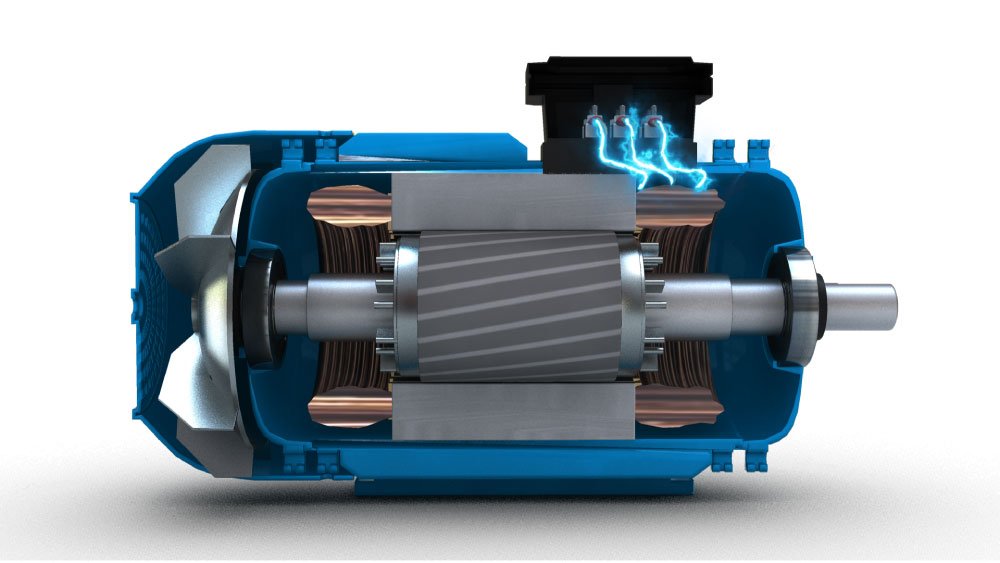
- Centrifugal pumps: use a rotating impeller to impart kinetic energy to fluid, converting velocity to pressure. The dominant pump type for water, clean liquids and many chemical applications. Simple, reliable, widely available. End-suction, split-case, multistage and submersible variants for different applications and head requirements.
- Positive displacement pumps: trap and displace a fixed volume of fluid per revolution or stroke, providing a consistent flow regardless of pressure. Used for viscous fluids, precise dosing, high-pressure applications and slurries. Types include gear pumps, screw pumps, peristaltic pumps, diaphragm pumps and piston pumps.
- Submersible pumps: motor and pump sealed in a waterproof housing for operation submerged in the fluid being pumped. Used in wells, sump drainage, sewage and mining dewatering.
- Slurry pumps: heavy-duty centrifugal or positive displacement pumps designed for abrasive solid-laden fluids. Used in mining, mineral processing and dredging.
- Metering and dosing pumps: precision positive displacement pumps for accurately injecting chemicals or additives at controlled rates. Used in water treatment, chemical processing and pharmaceuticals.
- Cryogenic pumps: designed for liquid gases (LNG, liquid nitrogen, liquid oxygen) at very low temperatures. Growing with LNG infrastructure expansion.
Key End-Use Industries
- Water and wastewater: the largest sector by volume. Pumps for water supply, distribution, wastewater collection, treatment and irrigation. Growing with water infrastructure investment globally. See our guide to the water treatment market.
- Oil and gas: the highest-value sector. Pipeline pumps, injection pumps, multiphase pumps, produced water handling and LNG pumps. Extreme reliability and performance requirements justify premium pump technology.
- Chemical and petrochemical: extensive use of centrifugal and positive displacement pumps for corrosive, high-temperature and hazardous fluids. API 610 (centrifugal) and API 674/675 (reciprocating/metering) are the key industry standards.
- Power generation: boiler feed pumps, cooling water pumps, condensate pumps. Critical and high-value applications.
- General industry and HVAC: building services pumps for heating, cooling and water supply. A large, commoditised segment. See our guide to the HVAC market.
Market Context
The global industrial pumps market is valued in the tens of billions of dollars, growing steadily with industrial investment cycles and infrastructure spending. See Actual Market Research's report on the global industrial pumps market for detailed analysis. Major companies include Grundfos (largest pump manufacturer globally), Xylem, Flowserve, ITT, KSB, Sulzer, Ebara, Weir Group (slurry pumps) and Wilo.
Energy Efficiency: The Major Opportunity
Pumps are estimated to consume 10% of global electricity. The majority of this energy is wasted through incorrect pump selection and fixed-speed operation. Pumps are often oversized at design (to accommodate future capacity), but operated against throttled valves at well below maximum flow, meaning energy is dissipated in the valve rather than delivered usefully. Variable Speed Drives (VSDs) allow pump speed to match actual demand — reducing power consumption by up to 50–60% for throttled applications (following the pump affinity laws, where power varies as the cube of speed). The combination of modern high-efficiency pumps and VSDs represents a major energy saving opportunity.
Smart Pumps and Digitalisation
Pump manufacturers are adding sensors and connectivity to pumps to enable remote monitoring, predictive maintenance and performance optimisation. Condition monitoring of vibration, temperature, bearing wear and power consumption enables maintenance teams to predict bearing failures or seal leaks before they cause unplanned shutdowns. Cloud-based pump monitoring platforms from Grundfos, Xylem and others are enabling pump-as-a-service business models. For related industrial automation context, see our guide to the industrial automation market.
Regional Outlook
Asia-Pacific is the largest pump market by volume, driven by infrastructure development in China and India. The Middle East and Africa are growing rapidly with oil and gas investment and water infrastructure spending. North America and Europe are mature markets with strong aftermarket service revenues and growing smart pump adoption. Water infrastructure investment globally is a consistent driver of pump demand regardless of broader economic cycles.
Frequently Asked Questions
What is the most common type of industrial pump?
Centrifugal pumps are by far the most widely installed type, accounting for over 70% of industrial pump installations. Their simplicity, reliability, range of available sizes and suitability for most clean liquid applications make them the default choice.
What is a variable speed drive (VSD) and why does it matter for pumps?
A VSD (also called a variable frequency drive or VFD) adjusts the motor speed driving a pump to match actual flow requirements. Because pump power follows the cube of speed (the affinity laws), reducing speed by 20% can reduce power consumption by approximately 50%, delivering dramatic energy savings in variable flow applications.
What is the difference between centrifugal and positive displacement pumps?
Centrifugal pumps use a rotating impeller to create flow through velocity. They are best for large volumes at moderate pressure with clean fluids. Positive displacement pumps trap and push fixed volumes and are better for viscous fluids, high pressures, precise dosing and abrasive slurries.
Pump Selection and Total Cost of Ownership
Correct pump selection is critical to lifecycle cost and reliability. Oversized pumps operating at off-design conditions suffer from cavitation, vibration and accelerated wear. Undersized pumps cannot meet process requirements. The correct approach is to model the system resistance curve and select a pump whose performance curve (head vs. flow) intersects it near the pump's best efficiency point (BEP). Variable speed drives allow the operating point to be continuously matched to actual demand, eliminating efficiency losses from throttling. Total cost of ownership calculations for pumps consistently show that energy cost over a 10–15-year pump life far exceeds the initial capital cost — making energy efficiency the dominant selection criterion for high-hours applications such as water supply, building services and process circulation.
Pump reliability and maintenance are key operational concerns in process industries. Mechanical seal failure is the most common cause of pump downtime — seals are subject to abrasion, heat and chemical attack. Seal selection (single, double, dry gas) must match the fluid being handled and the pressure, temperature and environmental requirements. Bearing wear is monitored through vibration analysis in predictive maintenance programmes. Regular oil analysis of pump-motor bearings, operating parameter trending and thermal imaging of motor windings are the main condition monitoring tools for pump reliability programmes. For predictive maintenance context, see our guide to the predictive maintenance market.
The water and wastewater infrastructure investment cycle is a key demand driver for industrial pumps globally. Ageing water infrastructure in developed markets (the US EPA estimates trillions of dollars of water infrastructure investment needed over 20 years), growing urban populations in emerging markets and climate-driven water security concerns are all driving long-term investment in water supply, treatment and distribution — all requiring pumps. For water sector context, see our guide to the water treatment market.
Conclusion
The industrial pumps market serves virtually every industrial sector, with steady demand from water infrastructure and process industries. Energy efficiency technology and digital monitoring are the primary value-creation opportunities in the mature pump industry. Contact Actual Market Research for detailed analysis of industrial pumps and equipment market segments.

Actual Market Research Analyst Team
Insights from 200+ analysts covering more than 15 industries, built on primary interviews, trade discussions and premium databases. About us